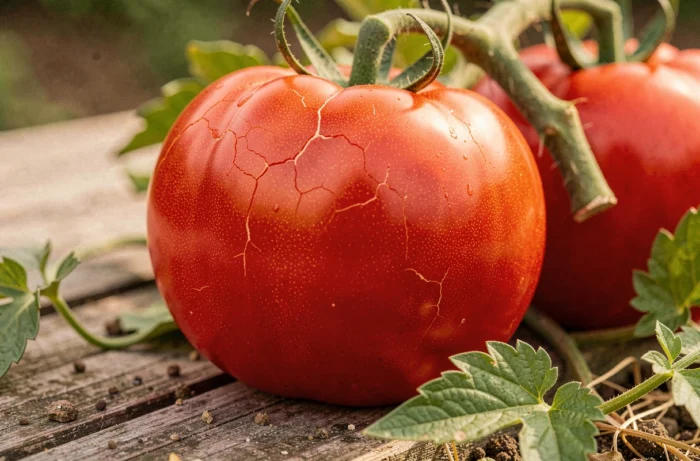
The thick skin of tomatoes rarely results from a single factor. It is the combination of water stress, the genetic heritage of the variety, and the growing conditions that determines the thickness of the cuticle. Understanding these mechanisms allows for action on the right levers at the right time in the growing cycle.
Tomato Cuticle: The Role of Calcium and Stomatal Regulation
The cuticle, this waxy layer that covers the fruit’s epidermis, thickens in response to hormonal signals related to abiotic stress. When the plant perceives a water deficit, it produces more abscisic acid (ABA), which triggers the closure of stomata on the leaves but also accelerates the deposition of cutin on the fruits.
Calcium plays a direct structural role in the cell wall of the epidermis. An excess of available calcium in the soil, combined with irregular watering, irreversibly stiffens the skin. Conversely, a calcium deficiency causes blossom end rot (apical necrosis), a distinct but often confused problem.
We observe that the regularity of watering matters more than the total volume of water supplied. A plant that receives three liters every two days develops a thinner cuticle than a plant receiving six liters every four days, even if the weekly amount is the same. The dry/wet alternation is the main trigger for cuticular thickening.
A gardener wondering why the skin of my tomatoes is thick should first examine their watering schedule before questioning the variety being grown.
Water Stress and Watering Restrictions: A Growing Problem in the Vegetable Garden
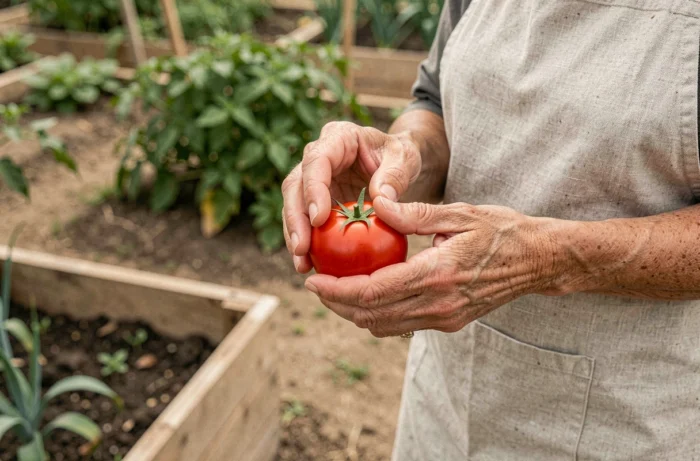
The VigiEau system, operational since 2023, classifies municipalities into levels of restriction (vigilance, alert, reinforced alert, crisis) and precisely regulates the watering of vegetable gardens. In the reinforced alert level, watering is limited to restricted time slots. In a crisis level, it may be completely prohibited.
The imposed water restrictions mechanically worsen the water stress of tomatoes. A gardener who can only water between 8 PM and 8 AM, or who must space out their watering, creates exactly the dry/wet alternation conditions that thicken the cuticle. The problem is no longer just technical; it is regulatory.
In the face of this constraint, several strategies can help maintain consistent moisture at the base of the plants:
- Thick mulching (straw, wood chips, dried grass clippings) reduces soil evaporation and buffers water fluctuations between two allowed waterings.
- Drip irrigation, with a slow and steady flow, limits waste and keeps the soil moist at depth without runoff.
- Collecting rainwater in barrels allows for watering outside of restrictions, provided local prefectural orders are checked, as they may regulate this use.
- Temporary shading (shade cloth, tall companion crops) reduces leaf transpiration and slows down substrate drying.
We recommend mulching right at planting and not during a heatwave. A soil that is already protected retains its moisture better than bare soil that is covered late.
Tomato Varieties with Thin or Thick Skin: A Often Underestimated Genetic Choice
The genetic heritage of the variety determines an incompressible cuticular thickness threshold. No cultivation technique will turn a Roma or a San Marzano into a thin-skinned tomato. These varieties, selected for canning or drying, inherently have a thick cuticle, which gives them their resistance to bursting and transport.
The recent trend to favor drought- and heat-resistant varieties amplifies this phenomenon. Tomatoes like Ananas, Cœur de Bœuf, or certain heat-stress-resistant F1 hybrids often have a more robust skin. The choice is between yield under difficult conditions and skin fineness.
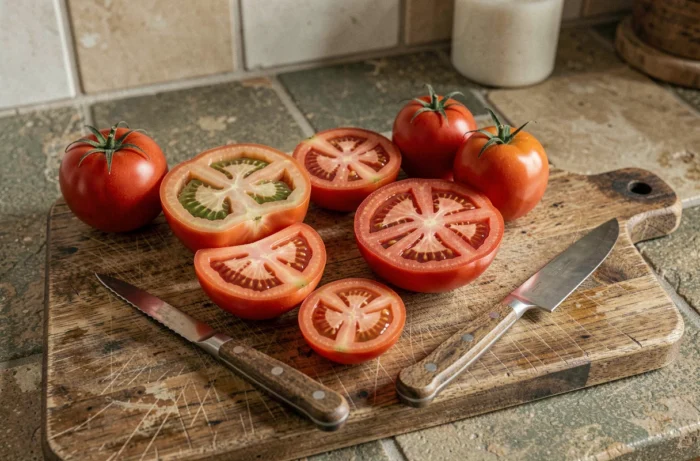
For gardeners seeking a fine skin in the mouth, we recommend cherry-type varieties (Sweet 100, Sungold) or some heirloom large-fruit varieties like Marmande or Brandywine, which naturally have a thin cuticle. The compromise to accept: these varieties burst more easily after a sudden heavy rain.
The choice of rootstock also deserves attention. A plant grafted onto a vigorous rootstock absorbs more water and nutrients, which can alter the skin thickness depending on the interactions between the scion and the rootstock. This information is rarely communicated at plant markets.
Temperature, Exposure, and Ripening: Cultural Factors That Harden the Skin
A tomato exposed to prolonged direct sunlight during the ripening phase develops a thicker skin as a photoprotective reaction. The fruit defends itself against UV rays by strengthening its cuticle, just as human skin thickens under the sun’s effect.
Temperature fluctuations between day and night play a complementary role. Cool nights followed by very hot days create thermal stress that stimulates cutin synthesis. Under greenhouse conditions, this phenomenon is amplified when ventilation is insufficient: the temperature skyrockets during the day and drops sharply at night.
The harvest stage directly influences the mouthfeel. A tomato harvested at full maturity on the plant has a skin perceived as thinner than a tomato picked when turning and ripened indoors. Natural ripening on the plant allows for partial degradation of the cuticle under the action of endogenous enzymes, a process that does not occur (or occurs little) after picking.
To limit thickening related to exposure, the foliage of the plant serves as a natural parasol. We discourage excessive leaf removal often practiced to hasten ripening: removing too many leaves exposes the fruits directly to the sun and hardens the skin. It is better to keep the leaves located above the clusters that are maturing.
The thickness of tomato skin is determined throughout the entire cycle, from genetics to harvest. Acting on a single parameter is not enough. Regularity of watering, appropriate variety choice for the intended use (salad, sauce, canning), protection against excessive sunlight, and harvesting at full maturity form a coherent whole. It is the combination of these adjustments, not an isolated trick, that yields fruits with a pleasant skin in the mouth.