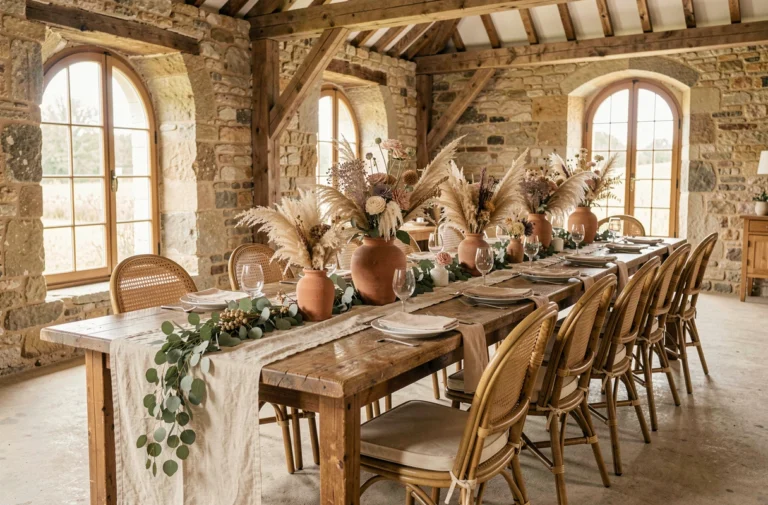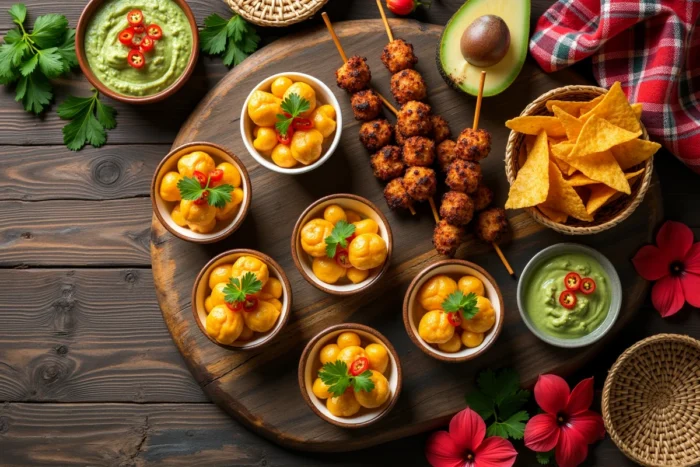
The exotic dinner aperitif captivates with its ability to transform an ordinary evening into a culinary journey. Creole cuisine, with its spices, golden fried foods, and flavorful sauces, is particularly well-suited to this format where each bite tells a story of origin. Accras, samosas, spicy candies, marinades: the repertoire is vast, but success relies less on the recipes than on the balance of flavors, textures, and practical management of the evening.
Creole frying for dinner aperitif: the temperature trap
The majority of Creole bites are based on frying. Cod accras, Reunionese spicy candies, stuffed samosas: these classics lose their appeal as soon as they cool down. A lukewarm accra becomes rubbery, a soggy samosa loses its charm.
The problem arises mainly in the mainland, during apartment parties. Feedback from organizers and specialized caterers converges on one point: managing frying indoors is the number one constraint, well ahead of recipe choices. Persistent odors, the risk of oil splatters, and the difficulty of maintaining a stable cooking temperature when churning out batches for twenty guests.
Several solutions exist. Frying outdoors (balcony, terrace) with an electric fryer limits nuisances. Preparing the bites in advance and reheating them in the oven at a high temperature just before serving offers an acceptable compromise. Some caterers who offer Creole aperitif ideas with TwimmCook rely on formats delivered ready to reheat, which eliminates the constraint of frying on-site.

Creole sauces and condiments: what makes the difference on an aperitif platter
A platter of Creole bites without sauce is like a concert without sound. Sauce chien (onions, chili, lime, oil) pairs well with both accras and marinated chicken skewers. The thicker Reunionese rougail tomato holds up better on a verrine or toast.
Sauce chien should be prepared on the same day, ideally one to two hours before serving so that the flavors infuse without the lime “cooking” the vegetables. The rougail, on the other hand, benefits from resting longer.
For a dinner aperitif that lasts several hours, planning at least two sauces with different profiles changes the perception of the buffet:
- A fresh and acidic sauce (sauce chien, Creole vinaigrette with lime) for fried foods and raw vegetables
- A spicy and dense sauce (rougail, spicy mango chutney) for meats and stuffed bites
- A sweet sauce based on coconut or passion fruit for guests who cannot handle spice
This trilogy covers most palates and avoids the trap of “all spice” that excludes some guests.
Creole cocktails for aperitif: beyond the ti-punch
The ti-punch remains the reflex when thinking of a Creole aperitif. Rum, cane sugar, lime: three ingredients, zero apparent complexity. The problem is that the ti-punch is a strong alcohol served neat, poorly suited for a dinner aperitif lasting several hours where guests nibble while standing.
Mixologists in France are increasingly incorporating revisited Creole cocktails for the dinner aperitif, combining a rum base with tropical fruits (passion fruit, mango) and contemporary touches like mango-chili syrup or ginger beer. These longer mixes, served over ice, pair better with savory bites over time.
A well-balanced planter, a lengthened coconut punch, or a passion-ginger cocktail offer finer pairings with the spicy flavors of the buffet. Also planning a non-alcoholic option (guava juice, coconut water, lime lemonade) is not a detail: it allows everyone to stay until the end.
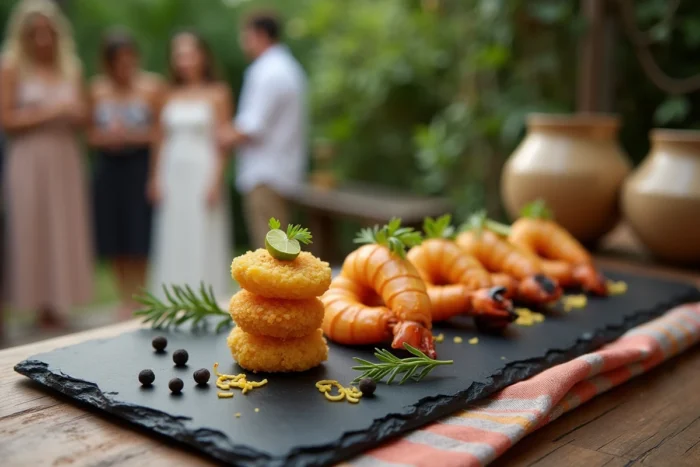
Composing a Creole aperitif buffet for twenty people: quantities and balance
Planning a Creole dinner aperitif for a group requires thinking in terms of categories rather than the number of recipes. A buffet offering five types of fried foods but nothing fresh quickly becomes tiresome.
The balance relies on three pillars: fried, fresh, sweet. Here’s a base composition that works:
- Two or three fried bites (cod accras, spicy candies, smoked chicken samosas) served warm or hot
- One or two fresh elements (fish tartare with coconut milk and lime, raw vegetables with sauce chien, avocado-crab verrine)
- A sweet touch at the end of the evening (coconut sorbet, small coconut cakes, banana-chocolate bites)
The “turnkey” Creole aperitif box formats that are developing in the mainland, offered by caterers and specialized artisans for groups of twenty to fifty people, follow this logic. Samosas, spicy candies, and homemade sauces arrive on ready-to-serve platters, simplifying preparation for the host.
For those cooking themselves, preparing the sauces and fillings the day before significantly reduces stress on the day of the event. Frying and plating remain the only last-minute steps.
Indoor Creole aperitif: allergens and dietary restrictions
Creole cuisine makes abundant use of fish, shellfish, peanuts (in some samosas or sauces), and gluten (batter for accras, wrappers for bites). In a group of twenty guests, the likelihood of encountering an allergy or intolerance is high.
Identifying allergens by bite and labeling them on the buffet (a simple tag is sufficient) avoids embarrassing situations. Gluten-free accras exist, replacing wheat flour with cassava flour, which remains consistent with Creole tradition. Marinated chicken skewers or a fish tartare without shellfish offer natural alternatives.
A successful exotic dinner aperitif is not measured by the number of spectacular recipes on the table, but by each guest’s ability to eat without fear and frustration. Anticipating dietary restrictions is part of the preparation, just like choosing spices or the evening’s playlist.