The news from Brittany is divided among a handful of historical regional newspapers, public audiovisual newsrooms, and, for the past few years, independent media funded by their readers. This diversity of sources does not automatically guarantee easy access to verified information about Brittany. Knowing where to search, and especially how to cross-reference, changes the quality of what we retain.
Brittany’s Independent Media: An Alternative to Regional Newspapers
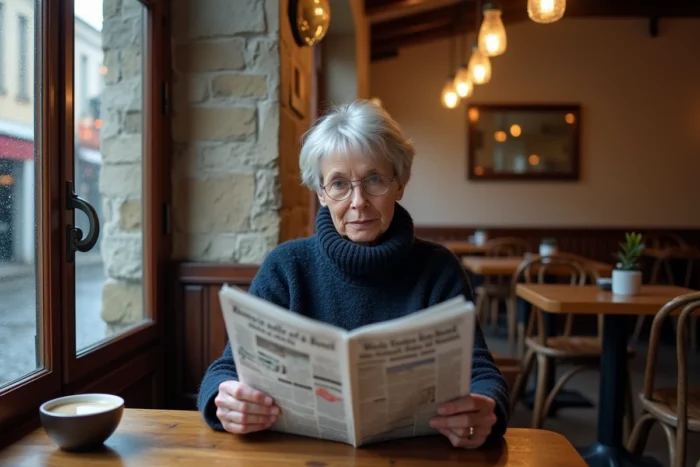
The media landscape in Brittany is still dominated by two historical titles, Ouest-France and Le Télégramme, which cover all four Breton departments with local newsrooms in most municipalities. Their strength lies in their territorial network: local news, municipal politics, amateur sports, local weather.
Their model relies on digital subscriptions and advertising. This means that some content remains behind a paywall, which can limit access to certain investigations or in-depth analyses.
Alongside these titles, territorial investigative media have developed over the past few years. Grand-Format, for example, produces long reports and field investigations in Brittany, funded by citizen support.
This type of newsroom focuses on topics that daily newspapers rarely cover in depth: industrial restructuring, land issues, local environmental questions. This complementarity between historical press and independent media allows for different angles on the same subject, particularly through reliable information on Bretagne Info.
Public Observatories and Breton Data: Little-Known Sources
News articles are not the only way to follow the reality in Brittany. Several public tools, often overlooked by the general public, produce regular and documented data about the region.
The Brittany Region has set up a Brittany Youth Observatory, dedicated to those aged 13-29. This free statistical tool allows for tracking living conditions, cultural practices, professional integration, and mobility of young Bretons. For a parent, a teacher, or a local elected official, it is a much more precise resource than any general article on “youth in Brittany.”
In parallel, the Bretagne Environnement platform publishes summaries on the impact of climate change on environments and water usage in the region. This data helps contextualize episodes of drought or heatwaves that the press covers as news, without always recalling underlying trends.
These two sources share a common point: they do not produce opinion, but raw data and factual analyses. They complement the press without replacing it.
What These Observatories Specifically Cover
- Living conditions and professional integration of young Bretons, with indicators regularly updated by the regional observatory
- Monitoring climate change in Brittany: pressures on aquatic environments, evolution of water usage, future projections via Bretagne Environnement
- INSEE data on demographics, employment, and the Breton economy, freely accessible and updated at the departmental level
Brittany News in Video and Social Media: Sorting Reliable from Viral
France 3 Bretagne remains the public audiovisual reference for regional information. Its news broadcasts cover the four departments with local editions (Rennes, Brest, Vannes, Lorient, Quimper). Reports are also accessible on replay, making it a verifiable video source.
On social media, the situation is more mixed. The Facebook pages and Instagram accounts of local newsrooms (Ouest-France Vannes, Le Télégramme, actu.fr Bretagne) share sourced articles. The problem arises from content shared out of context, often video excerpts without links to the full article, which circulate with truncated or rephrased headlines.
To verify information seen on a social network, a simple method works: search for the topic directly on the cited media’s website. If the article does not exist on the source site, the information is likely distorted or invented.
Criteria for Evaluating an Online Breton News Source
- Is the newsroom identifiable, with named journalists and a displayed editorial line?
- Are the articles dated and updated when the situation evolves?
- Does the media clearly distinguish between facts, analyses, and opinion pieces?
- Are the free contents funded by advertising, subscriptions, or citizen donations? This economic model influences editorial independence

Local Breton Press and Coverage by Department: Adapting Sources to the Territory
The administrative Brittany consists of four departments (Côtes-d’Armor, Finistère, Ille-et-Vilaine, Morbihan), and media coverage is not uniform. Le Télégramme primarily covers Finistère and Morbihan, while Ouest-France has a broader presence in Ille-et-Vilaine and Côtes-d’Armor.
For hyperlocal information (municipality, intercommunalities), the actu.fr network offers editions by agglomeration with dedicated newsrooms. Cross-referencing at least two sources on the same local fact remains the most reliable method for forming a documented opinion.
Institutional websites (prefectures, community of communes, Brittany Region) also publish press releases and decrees that complement journalistic coverage, particularly on weather alerts, regulations, or calls for projects.
Following Breton news rigorously does not require multiplying subscriptions. Combining a regional daily, an independent media outlet, and one or two public observatories covers the majority of topics affecting the territory, from weather to environmental issues to local economic life.