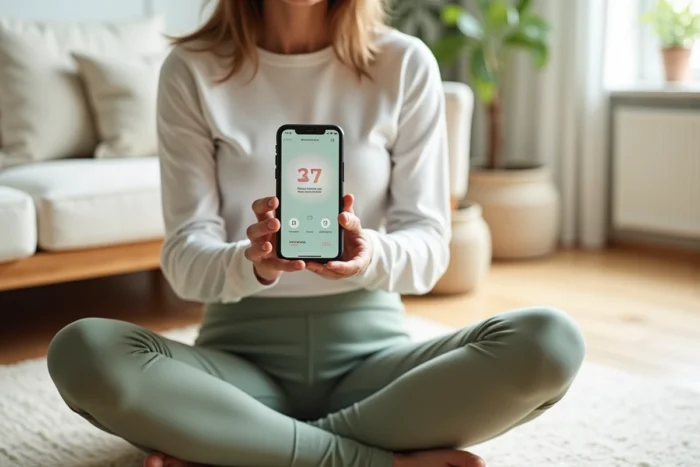
Samsung Health Assistant is based on an architecture that intersects data streams from five distinct pillars: sleep, physical activity, nutrition, mindfulness, and bodily constants. This integrated approach contrasts with applications that stack isolated indicators without ever linking them. We are witnessing a paradigm shift in the design of AI-driven health assistants, where the correlation between metrics takes precedence over raw display.
Health Data Privacy and Limits of AI Coaching
The promise of advanced personalization put forth by Samsung and OpenAI faces a structural problem that marketing presentations gloss over: the user’s trust in the handling of their medical data. Connecting an AI assistant to one’s bodily constants, sleep history, and eating habits requires technical transparency regarding storage, encryption, and potential sharing with third parties.
Samsung clarifies that Health Assistant is not a diagnostic or treatment tool. This legal mention protects the manufacturer, but it creates a gray area for the user. The behavioral coaching offered (recommendations on sleep, nutrition, stress management) resembles a health advisory without carrying the regulatory responsibility.
We recommend clearly distinguishing between two uses: assisted data reading (understanding why sleep quality declined this week) and actionable advice (modifying one’s diet or meditation). The first falls under statistical analysis, while the second engages the medical quality of the advice. No public AI assistant currently has a medical certification framework for the latter.
The current deployment, limited to a beta for eligible American users, illustrates this caution. Samsung does not communicate a precise global timeline, suggesting that local regulatory constraints (GDPR in Europe, in particular) are hindering the rollout.

Architecture of the Five Pillars of Samsung Health Assistant
Among the innovations of Your Health Assistant that deserve technical analysis, the structuring into interconnected pillars represents the most concrete contribution. Rather than treating each data stream in isolation, the assistant correlates information to produce cross-sectional summaries.
The five pillars operate according to a logic of dependencies:
- Sleep directly influences physical activity scores and bodily constants measured the next day, allowing the assistant to contextualize a drop in performance
- Nutrition and mindfulness (meditation, breathing exercises) feed into a stress profile that modulates activity recommendations
- Bodily constants (heart rate, oxygen saturation) serve as a control variable to validate or invalidate the correlations detected among the other pillars
This architecture goes beyond a simple metric aggregator. It transforms the application into a body awareness interface where each data point makes sense in relation to the others. A spike in nighttime heart rate, for example, can be related to a late meal or the absence of a meditation session.
Limits of Automated Correlation
Correlation is not causation. An assistant that systematically links poor sleep and rich evening meals may produce relevant recommendations in most cases but could overlook an underlying pathology. The main risk remains false reassurance: the user who receives consistent advice from their assistant may delay a necessary medical consultation.
Taking Action: The Real Bottleneck
Samsung announces future expanded coaching features, including weight management. This direction confirms that the product is evolving into a broader behavioral tracking layer than just a data reading chatbot. The question remains whether AI can truly change daily habits.
Health applications all suffer from the same problem: the dropout rate after a few weeks. Understanding the data has never been the main barrier. A user generally knows that they are sleeping poorly or lacking physical activity. What they lack is a mechanism for behavioral persistence.
An AI health assistant must solve the problem of action, not that of information. Displaying a poor sleep score is only valuable if the application offers a micro-action that can be taken that very evening (reducing screen exposure at a specific time, starting a guided meditation session tailored to the measured stress level).

Habits and Feedback Loops
Effective coaching relies on short loops: action, measurement, feedback. If the assistant detects that the user followed their meditation recommendation and their sleep improved the following night, positive reinforcement becomes concrete and measurable. Without this loop, coaching reduces to a list of generic advice.
Samsung seems to have understood this by integrating mindfulness as a full-fledged pillar rather than a secondary function. Stress, quantified via heart rate variability and body awareness exercises, becomes a lever for direct action rather than just a passive indicator.
Medical Quality of Recommendations and Responsibility
The positioning of Samsung Health Assistant as a tool for understanding (and not for diagnosis) raises a fundamental question about the quality of the information provided. Nutrition or sleep recommendations generated by AI do not go through any medical validation committee in real-time.
This lack of clinical validation does not prevent the assistant from being useful for a healthy audience seeking to optimize their habits. The problem arises at the margins: users suffering from chronic pathologies, medically-based sleep disorders, eating disorders. For these profiles, poorly calibrated automated advice can worsen the situation.
We observe that neither Samsung nor OpenAI (with ChatGPT Health) offers an escalation mechanism to a healthcare professional integrated into the interface. The assistant advises but does not know when it should step aside in favor of a doctor. As long as this medical referral function remains absent, the AI health assistant will remain a comfort tool, not a clinical health tool.