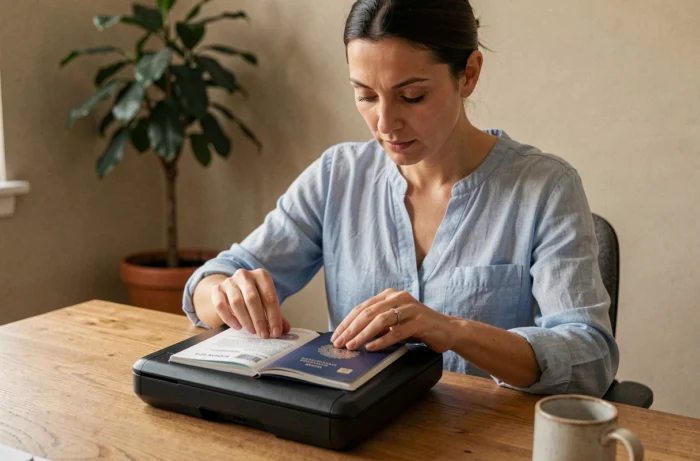
A photocopy of a passport has no legal value for crossing a border. It does not replace the original document during an official identity check. Its usefulness lies elsewhere: speeding up consular procedures in case of loss or theft, serving as a reference for document numbers, and limiting the exposure of the original in everyday travel situations.
Which pages of the passport to photocopy and in what format
The page to photocopy as a priority is the passport identity page, which contains the photo, document number, dates of issue and expiration, as well as the MRZ (Machine Readable Zone) at the bottom. This page contains all the necessary information for reporting a loss to a consulate or a local police station.
If the passport contains valid visas, also photocopy the corresponding pages. A lost visa without a copy complicates proof of legal stay in certain countries.
Two complementary formats offer realistic security. The paper format, kept in a separate bag from the original, remains accessible without a connection or battery. The digital format (scan or high-resolution photo) stored in a secure cloud service allows recovery of the document even in case of theft of all luggage.
Keeping a photocopy of the passport page in both paper and digital versions significantly reduces the risk of being left without any usable reference.
Passport photocopy and on-site checks: what is accepted or not
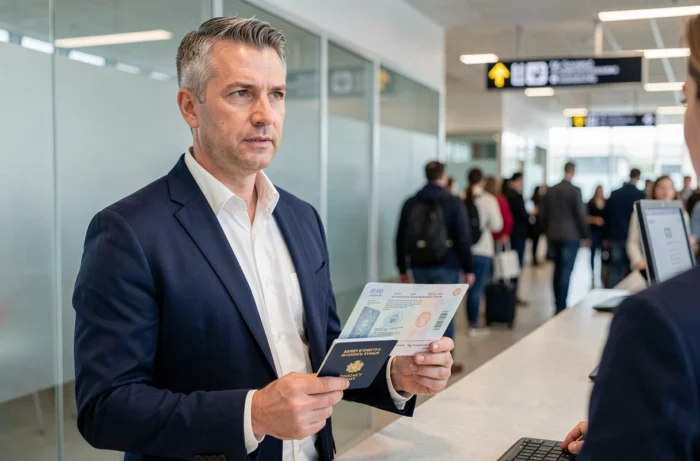
In most countries, a photocopy of the passport is not an acceptable identity document during a police check. The original remains mandatory, and presenting only a copy may lead to a longer verification process or even administrative detention while confirming identity.
The situation differs depending on the specific context. Some hotels accept a photocopy for check-in, allowing the original to be left in a safe. In the Schengen area, for European citizens, the identity card is sufficient as a travel document between member states, and the passport is then only a supplementary document.
For vehicle rentals, organized excursions, or currency exchanges, the copy often serves as a reference document without having to entrust the original to a third party. It is precisely in these everyday interactions that the photocopy takes on its practical value.
The case of countries with mandatory visas
When a visa is affixed in the passport, the original is required at border control points. A copy of the visa never exempts one from presenting the stamped document. However, a copy of the visa facilitates renewal or replacement at the embassy of the destination country if the original is lost.
Securing the digital copy of the passport against data theft risks
Scanning a passport and storing it online creates a risk of identity theft. A file containing the passport number, date of birth, and photo is enough to fuel fraud attempts. A few precautions can reduce this exposure:
- Store the scan in a encrypted digital safe rather than in the phone’s photo gallery or an unprotected cloud folder.
- Protect the file with a password distinct from that of the email account, and enable two-factor authentication on the storage service.
- Avoid sending the copy via unencrypted instant messaging. Messages remain on servers and can be accessed if the account is compromised.
- Delete temporary copies (downloaded attachments, files in the downloads folder) after transferring them to the secure space.
The goal is to make the copy accessible only to its owner, even in case of phone loss. An unprotected passport scan on a stolen device is equivalent to losing the passport itself from the perspective of identity theft.
Reporting loss abroad: how the photocopy speeds up the consular procedure
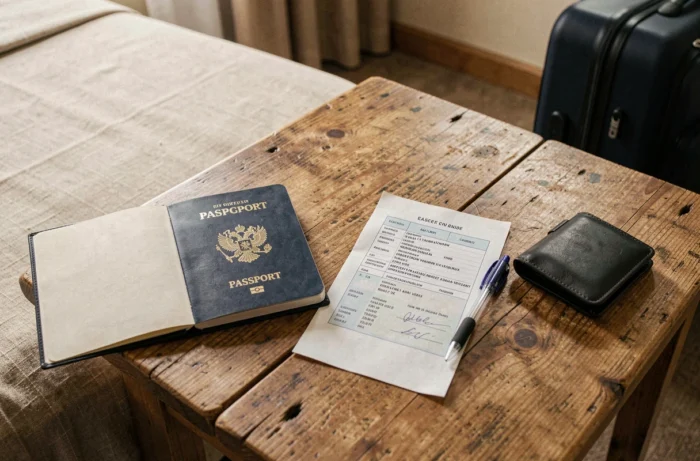
In case of theft or loss of the passport outside France, the first step is to file a report with the local police, then contact the nearest French consulate. The consulate can issue a laissez-passer, a temporary document that allows return to France.
The photocopy of the passport comes into play at this stage. It provides the consulate with the document number, date, and place of issue, which speeds up verification in the databases. Without a copy, identification relies solely on consular files, which can lengthen processing time.
Other useful documents to photocopy before departure
The passport is not the only document to duplicate. A copy of travel insurance (with the contract number and assistance phone number) allows contacting the insurer without delay. A copy of the international driving permit, flight tickets, and booking confirmations completes a usable emergency file in a crisis situation.
Gathering these copies in a physical folder and in the same secure digital folder avoids searching for each document separately when stress complicates everything.
The photocopy of the passport does not protect against loss. It protects against the consequences of loss, making each administrative step faster and each interaction with local authorities less uncertain.