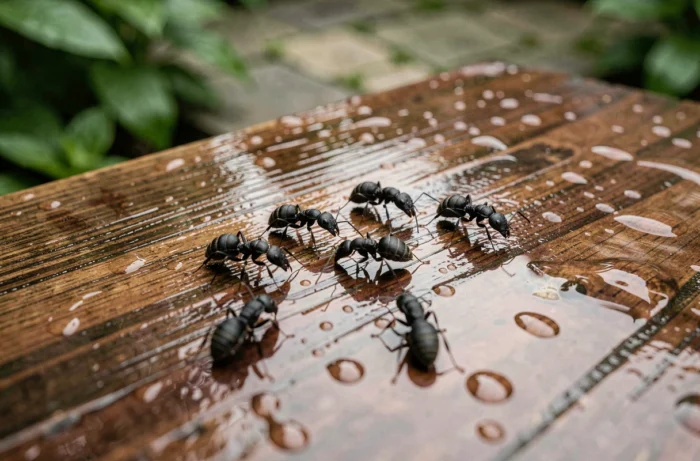
After a summer storm, clouds of tiny black insects settle on the skin, clothing, walls, and screens. The phenomenon can last for a few hours or several days. Behind this invasion, there are often thrips, but not always. Confusing the species delays the appropriate response and can turn a temporary nuisance into a lasting problem.
Thrips, springtails, or fleas: black color alone is not enough to decide
Many online guides suggest identifying the insect solely by its size and color. A tiny black insect measuring one to two millimeters with an elongated body resembles a thrips. However, a springtail or an adult flea can appear similar to the naked eye.
The most reliable distinction relies on the context of appearance rather than color. A thrips appears in mass just before or after a storm when the air becomes heavy and humid. It moves in swarms and sticks to light surfaces. The springtail, on the other hand, appears in areas that are persistently damp: waterlogged potting soil, poorly ventilated bathrooms, the base of a porous wall. It jumps when disturbed, which thrips do not.
Finally, the flea bites repeatedly at the ankles and calves, leaving a series of small red bumps in a line. If the bites are concentrated on the legs and a pet shares the living space, the diagnosis quickly narrows down. To identify a tiny black insect after the storm, cross-referencing the location, the insect’s behavior, and the location of any bites remains the quickest method.
The yellow sticky trap as a confirmation tool
Hanging a yellow sticky trap near a window or indoor plant helps clarify any doubts. If dozens of insects are stuck to it within a few hours, the invasion likely comes from nearby crops or the garden. If the trap remains almost empty, the problem is more localized: checking indoor moisture sources becomes a priority.
Thrips bites on the skin: appropriate reaction and common mistakes
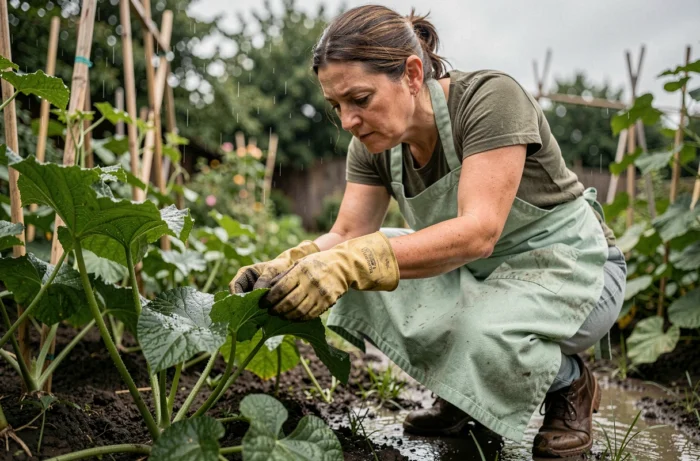
Thrips do not bite in the strict sense of the term. They pierce the outer layer of the skin with their mouthparts, causing slight irritation and sometimes itching. The reaction varies greatly from person to person.
The recommended response is mechanical: remove the insects with clear water or a damp cloth, then cool the irritated area. Scratching worsens the skin reaction and can lead to a secondary infection.
Some home remedies circulate online: diluted black soap, white vinegar applied directly to the skin. These solutions, suitable for treating plants, are not appropriate for the skin. Vinegar and concentrated soapy preparations can further irritate skin already weakened by micro-bites.
- Rinse the skin with lukewarm water to dislodge the thrips without crushing them
- Apply a cool cloth or cold compress to the itchy areas
- Avoid scratching, even if the irritation persists for a few hours
- Consult a pharmacist if the skin reaction spreads or lasts more than two days
Eliminate the source before treating the symptoms
After a storm, the temptation is to spray an insecticide inside the house. This approach rarely solves the problem. If the invasion comes from outside (harvested fields, hedges, lawn), thrips stop entering as soon as the atmospheric conditions change. An indoor chemical treatment then has no lasting effect.
The priority measure is to eliminate the source of moisture or organic matter. Indoors, this means ventilating the rooms, repairing leaks, reducing condensation, and replacing waterlogged potting soil in plant pots. These actions also eliminate springtails if the initial identification proves to be incorrect.
When the insect returns after every rain
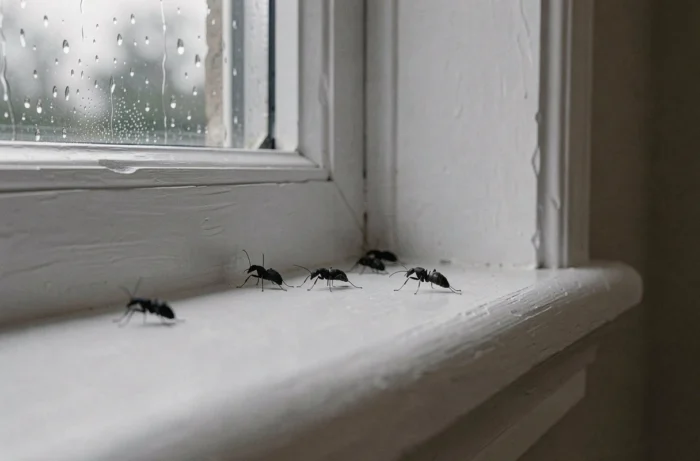
An isolated episode after a heavy storm does not justify heavy intervention. However, repeated returns indicate a structural humidity problem in the building: rising damp, waterproofing defects, insufficient ventilation. The black insects attracted by moisture (springtails, psocids, small beetles) then act as indicators.
Treating the insects without correcting the humidity is like mopping the floor without turning off the tap. A humidity diagnosis performed by a professional can determine whether the problem comes from condensation, infiltration, or rising from the ground.
Damage to indoor and garden plants: thrips beyond skin irritation
Thrips do not just annoy us. They feed by piercing plant cells and sucking out their contents. Affected leaves show silver spots, discolored streaks, and eventually localized drying.
On indoor plants, the first signs appear on the most tender leaves and flower buds. Regular inspection of the underside of the leaves, where thrips lay their eggs, allows for early detection of infestation.
- Isolate the infested plant to prevent the spread to neighboring pots
- Shower the foliage with clear water to dislodge adults and larvae
- Install a yellow sticky trap nearby to assess the remaining pressure
If the population persists after two weeks of mechanical treatment, a very diluted black soap sprayed on the foliage (not on the skin) can complement the action. The available data does not allow for a conclusion on the comparative effectiveness of different concentrations: testing on a leaf before treating the entire plant remains the basic precaution.
The massive appearance of thrips after a storm is mostly a result of a temporary meteorological phenomenon. The most useful reflex is not to look for a product, but to cross-reference three clues (location, behavior, possible bites) to make the correct diagnosis. Once the species is identified, the response often comes down to one word: ventilation.