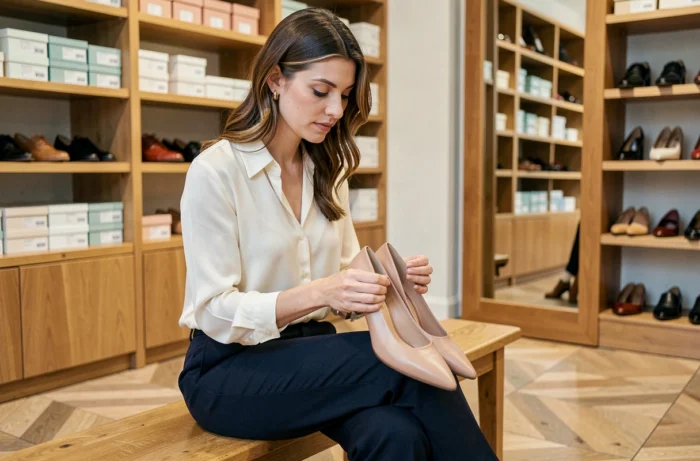
Between a soft loafer worn to the office and a lace-up derby put on for a ceremony, the foot faces very different demands. Choosing elegant, comfortable shoes for every occasion means considering several factors: closure type, last width, upper material and sole flexibility.
The challenge becomes more complicated when foot volume changes throughout the day—a common occurrence that can make trying shoes on in the morning misleading.
Width, support and foot volume: what your shoe size doesn’t tell you
Your shoe size indicates the length of your foot. It says nothing about its width, arch or instep height. Two people who wear a size 41 may need very different shoe shapes.
A guide specializing in comfort for swollen feet recommends always trying on both shoes at the end of the day, when foot volume is at its greatest. Choosing a pair to fit your larger foot helps prevent the compression that causes pain and rubbing.
For feet whose volume changes noticeably from morning to evening, an adjustable shoe (laces, buckle or notched strap) offers a fit that neither loafers nor ballet flats can provide. Compensating by going up a size makes the shoe unnecessarily long, changing the point of contact with the ground and throwing off your gait. Choosing a wider shape rather than a longer one is the right solution to this common problem.
If swelling is sudden, painful or limited to one foot, the issue is no longer about choosing shoes and requires medical advice. A shopping advice article is no substitute for a diagnosis.
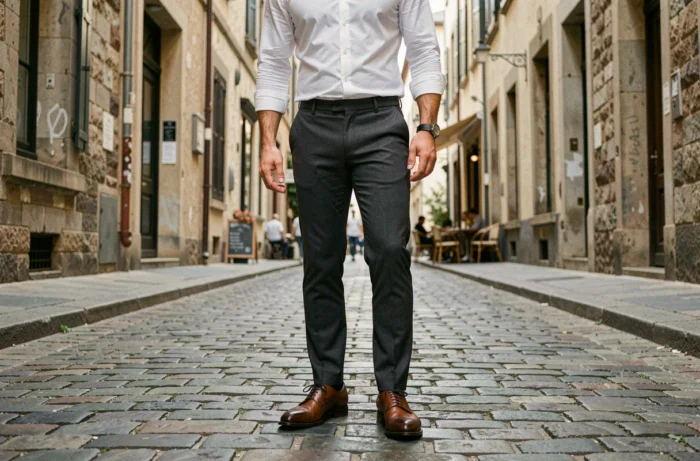
Comparing elegant shoe styles by occasion and comfort
Classic styles don’t all offer the same balance of style and comfort. The table below compares five types of shoes by where they’re worn and how much support they provide. It makes it easy to spot the differences between a formal Oxford and a casual loafer.
| Style | Formality | Adjustable closure | Foot support | Suitable occasions |
|---|---|---|---|---|
| Oxford | Very formal | Yes (closed lacing) | High | Ceremonies, interviews, weddings |
| Derby | Formal to smart casual | Yes (open lacing) | Good, more flexible than an Oxford | Office, semi-formal evenings |
| Loafer | Smart casual | No | Low to moderate | Everyday wear, casual meetings |
| Leather ankle boot | Varies by finish | Varies (laces, zip, elastic) | Good (high-cut upper) | Transitional seasons, outings, office |
| Leather sneakers | Casual chic | Yes (laces) | Good, cushioned sole | Weekends, travel, casual Friday |
The derby stands out for its open lacing, which accommodates feet that swell during the day more easily. The Oxford, with its closed lacing, has a sleeker silhouette but is less forgiving of changes in foot volume. A catalog such as the one available at https://grainedeshoes.com makes it easier to compare the shapes available for each style.
Leather, suede or textile: which material combines style and durability?
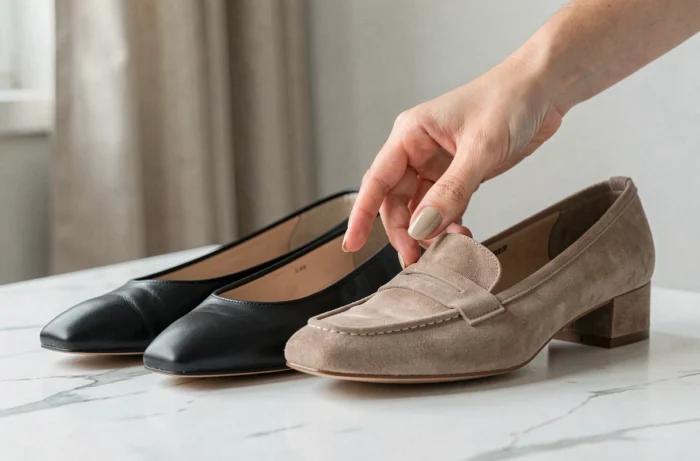
The upper material affects comfort as much as appearance. Full-grain leather remains the benchmark for elegant shoes: it develops a patina, breathes and can be resoled. Suede (roughout leather) has a softer texture and a less formal look, making it suitable for smart-casual settings.
Full-grain leather gradually molds to the shape of your foot, improving comfort over the course of several weeks. Suede is more vulnerable to water and needs regular care (brushing and waterproofing spray) to maintain its appearance.
Leather and technical textile sneakers have now become part of the casual-chic wardrobe. Their cushioned soles make up for the lack of a rigid shank, but they don’t last as long as Goodyear- or Blake-stitched derbies.
- For regular formal wear, smooth-finish full-grain leather offers the best balance of elegance, durability and long-term comfort.
- For mixed use (office followed by an evening out), a grained leather derby resists scuffs better than smooth leather while still looking smart.
- For occasional or seasonal wear, suede is a good choice if you’re prepared to care for it more often and avoid wearing it on rainy days.
European regulations and sustainable choices: what’s changing for footwear
The European Sustainable Products Ecodesign Regulation (ESPR), which entered into force on 18 July 2024, establishes a framework that will gradually affect the footwear sector. Specific requirements (minimum durability, repairability and product information) will depend on rules for individual product categories, which are still being developed as part of the ESPR 2025–2030 working plan.
One provision directly affects shoppers: the ban on destroying unsold goods, including shoes, applies to large companies from 19 July 2026. This measure encourages brands to resell, discount or reuse products rather than discard them. For consumers, it could mean greater access to quality styles through second-hand and end-of-line channels.
Choosing a pair that can be resoled or restitched can extend its life by several years. A Goodyear-stitched Oxford, for example, can be resoled two or three times, making it a better-value investment than a cemented style that needs replacing every season.
Leather shoe care: practical steps to preserve comfort and appearance
A well-maintained pair stays supple and supportive for longer. Leather is a natural material that dries out and cracks without regular care.
- Use cedar shoe trees after every wear to absorb moisture and help the shoes retain their shape.
- Apply shoe polish or nourishing cream every two to three weeks of wear to preserve the leather’s suppleness and water resistance.
- Rotate at least two pairs to give the leather time to dry between wears, which slows wear on the insole.
The comfort of an elegant shoe isn’t determined at the time of purchase alone. A pair of leather shoes that’s properly conditioned, worn in rotation and resoled when the sole wears down will stay comfortable and presentable far longer than a neglected pair. The initial choice matters, but the care that follows determines how long that comfort really lasts.